No Hot Water? Diagnose the Likely Cause
Waking up to cold water is never fun, and it usually happens at the worst possible moment. Most no-hot-water cases fall into a handful of common causes, and the order you check them in matters as much as the checks themselves. Here is how to work through it from the simplest fix up to the one that genuinely needs a plumber, and how to tell when repairing the unit stops making sense.
Work out which hot water system you have
Before you touch anything, identify what you are dealing with, because the type of unit decides what you are allowed to check. A gas continuous-flow unit is usually a slim box mounted on an outside wall with a flue or vent, and it has no tank at all. An electric storage system is a cylinder, often in a laundry, garage or cupboard, with a power cable and a temperature and pressure relief valve on the side. A heat pump looks like a tank with a fan and a compressor on top, and it hums like a refrigerator when it runs. Solar hot water has collectors on the roof and either a tank up there or a tank on the ground with a pump, and most have an electric or gas booster for cloudy days and heavy use. A gas storage unit is a cylinder with a burner underneath and a flue, and it is the type most likely to have a pilot light. If you cannot find the unit, follow the pipes or listen for a burner firing, and in an apartment ask the building manager where it sits. The data plate gives the model, the size and the age, so photograph it before you call anyone, because those details shape the diagnosis and the price of a fix.
No hot water at all
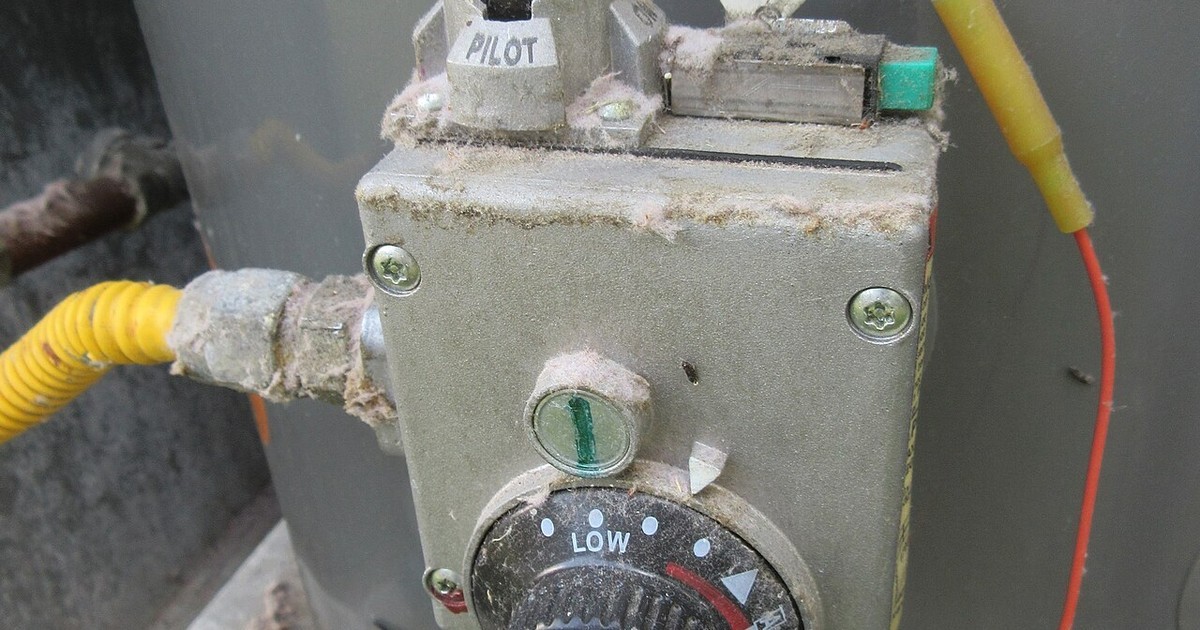
Losing hot water at every tap is the clearest signal, because it narrows the fault to the unit rather than to one outlet. On an electric storage system the usual suspects are a tripped breaker, a blown heating element, a failed thermostat, or the reset button on the thermostat having tripped, which is the cheapest of all to fix. A breaker that trips again the moment you reset it points at a fault in the element or the wiring rather than a random overload. On a gas storage unit, a pilot light that has gone out will stop the whole tank heating. A gas continuous-flow unit has no tank and no pilot in the old sense, so there is nothing to relight, and if it does not fire when a hot tap runs the fault is usually a gas supply, ignition or water flow problem. On a heat pump, a tripped breaker, a fault code on the display or a blocked outdoor unit will stop it heating. A solar system with an electric booster behaves like an electric tank when that booster fails. If every hot tap runs cold while the cold taps behave normally, the heater is where to look.
Runs out quickly, or the water is lukewarm
Plenty of hot water that fades after two showers, or water that arrives warm but never hot, points at a different set of causes than no hot water at all, because the unit is still working but underperforming. A storage tank that recovers slowly may have a failing lower element or a thermostat set low, so it heats only part of its volume. Scale on an element or inside a heat exchanger insulates it from the water and lengthens recovery time. A continuous-flow unit delivering lukewarm water is often struggling with too little gas or too little flow, or it is not sized for the number of outlets running at once. A heat pump that runs constantly and still cannot keep up may be low on refrigerant, or sitting somewhere with poor airflow around it. If it is a solar system, a run of grey days leaves the booster doing all the work, and the tank feels smaller than it did in summer. Intermittent hot water, where the temperature swings between hot and cold, usually points to a thermostat, a sensor or a mixer cartridge.
One tap only, or water that is too hot
If the kitchen tap runs hot and the shower does not, the heater is fine and the problem sits at the outlet. A mixer cartridge that has failed, a tap plumbed or adjusted wrongly, or a shower mixer with a stuck thermostatic element will all produce one faulty outlet while the rest of the house behaves normally. Hot water at the cold tap is a different matter, and it often means a cross connection or a failed mixer letting hot water travel the wrong way. That is worth fixing quickly, because it can scald and it quietly wastes energy while nobody notices. Water that comes out scalding points at a thermostat set too high, or a tempering valve that has failed on the outlet side. Older systems were often set hotter than today's recommended maximum, and a failed tempering valve is a real scald risk, particularly for children, older people and anyone with limited mobility. If more than one unit in a strata building loses temperature at the same time, tell the building manager, because the cause may sit in shared pipework rather than inside your own heater.
What you can safely check yourself
Stay with the checks that need no tools and no disassembly. At the switchboard, look for a tripped circuit breaker or a safety switch on the circuit that feeds the heater, and reset it once. If it trips again straight away, stop and leave it alone. Learn which switch feeds the unit and label it, so the next person to look knows where to start. On an electric storage unit, the reset button on the thermostat is the next thing to press, and it settles more cases than most people expect. Look for a display or an error code on the unit and write it down, because it tells a technician where to start. Find the isolation valve on the cold inlet and confirm it is open, since a valve left part closed after other work will starve the unit and make a healthy heater look faulty. If the unit is gas, check that other gas appliances in the house still work. When the cooktop is also out, the problem may sit with the supply rather than the heater. Note what has changed since the water was last hot, such as recent plumbing work, a storm or a power outage, because that history narrows the cause fast.
What not to touch
Some of this equipment is not a householder's job, and the line is easy to draw. Do not open the gas valve, remove a gas fitting, or dismantle any part of a gas burner, flue or pilot assembly. Gas work in NSW must be done by a qualified gas fitter, and a mistake can be fatal. Do not adjust or remove the tempering valve, which is the fitting that limits outlet temperature and protects against scalding. Do not lift the covers on electrical components, break a security seal, or touch anything on a unit that is still connected to power, because a storage tank holds a live element and water in the same place. Do not patch a leaking tank with sealant or tape, and do not try to straighten or plug a relief valve. Never block or cover a flue, and never box a unit in for the sake of tidiness. If a part is sealed by the manufacturer, that seal is there for a reason, and breaking it can void the warranty as well as create a hazard.
If you smell gas, leave the house and call the utility
Gas safety outranks every diagnostic step in this guide, and it is the one part of the job that is not negotiable. If you can smell gas, or hear it escaping, do not go looking for the source. Do not hunt for a pilot light, do not flick a light switch, do not use a phone indoors, and do not strike a match to test anything. Get everyone out of the house, leave the doors open as you go if it is safe to do so, and once you are clear call the gas emergency line for your network, or 000 if there is any risk to life. Wait for the network crew to make the property safe before you go back inside. Only after a gas fitter has cleared the fault should you think about diagnosis and repairs. A gas appliance that will not stay lit is a job for a gas fitter, and a persistent smell of gas is an emergency rather than a service call A faint smell that comes and goes is still worth a call rather than a wait, because gas can travel along a pipe run or a wall cavity before it reaches you.
What a licensed plumber or gas fitter will test
A technician works through the system in a set order, which is why a callout so often lands on the cause quickly. On an electric storage tank that means testing the element and thermostat with a multimeter, checking for power at the unit, checking the reset and the safety cut-out, and looking at the anode and the tank base for corrosion. On a gas unit, a gas fitter checks the supply and pressure, tests the ignition and the thermocouple or flame sensor, and inspects the burner and flue. On a continuous-flow unit, they check the flow rate, the gas pressure and the heat exchanger for scale. On a heat pump, they read the fault codes, check refrigerant pressures and confirm airflow around the unit. Leak detection is part of the visit too, because a weeping relief valve or a corroded fitting often explains the failure. An independent plumber can test the element, thermostat and tank, tell you plainly whether the part is worth replacing, and set the findings out in a written quote.
Repair or replace: which way to go
Once the cause is known, the choice between repair and replacement comes down to a few honest questions. How old is the unit, and how much of its expected life has already gone? Is the fault a single replaceable part, such as a thermostat, an element or a thermocouple, or is the tank itself leaking and corroded? A tank that has rusted through cannot be repaired, only replaced, and no amount of sealant buys you real time. A unit that is leaking, making strange noises, or already well past its service life is usually not worth spending on, because the next failure is never far behind. Weigh the repair cost against the price of a like-for-like replacement, and ask whether a different type of unit could be cheaper to run, such as a heat pump in place of an old electric tank. Ask for a written quote that covers parts, labour and a compliance certificate, and ask your plumber which option they would take in their own home. If the visit also covers a slow drain or an ageing pipe repair, mention it when you book so one trip handles both.
Common questions
Why did my hot water suddenly stop?
Most commonly a tripped breaker, a blown heating element, a failed thermostat, or a pilot light that has gone out on a gas storage unit. A continuous-flow unit more often points to gas supply or ignition, and a heat pump to a fault code. The tank itself is the other possibility.
Can I replace a heating element myself?
It involves draining the tank and working around live electrical parts, so it is best left to a licensed plumber for safety and code compliance. A tank drained and refilled badly can leak, and an element fitted with the wrong gasket or torque will fail early.
Why does the reset button keep tripping?
A reset that trips repeatedly usually means a failing element or thermostat rather than a one-off overload, so pressing it again will not fix it. Book a plumber to test both parts and replace the faulty one. If the breaker itself trips, treat that as a switchboard issue.
How can I tell which hot water system I have?
Look at the unit itself. A tank with a power cable is electric storage, a slim wall box with a flue and no tank is gas continuous flow, and a tank with a fan and compressor on top is a heat pump. Collectors on the roof mean solar hot water.
Need a licensed plumber in Sydney?
Tell us what's going on and a local plumber will get back to you fast.
Get my free quoteGet a free quote
Tell us what you need and a local, licensed plumber in Sydney will call you back. No obligation.
- Local, licensed plumbers
- Fast response — incl. emergencies
- Free quote, you choose who to hire